
Aviemore Abundance
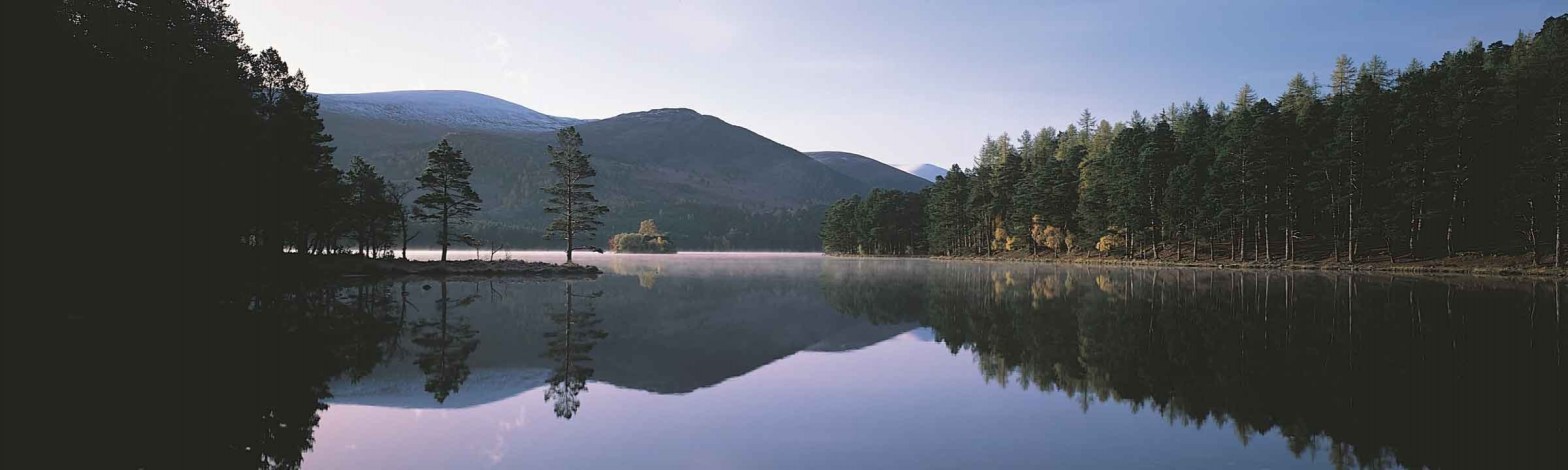
Looking out from our hotel’s dining room, we could see the fells in the distance through the French Windows – illuminated as they were in the glaringly bright morning sun. The Scottish breakfasts (don’t call it English, you’ll get looked at funny) were ordered and we wondered what the day would have in store for us. Whilst we were waiting for our greasy fry-up to arrive, we dug in to the breakfast buffet like starved savages: toast, cereals, yoghurt and fruit all vanishing with gusto.
Our breakfast conversation sounded like any other morning, requests to pass the toast or pour some extra orange juice, even how beautiful the weather was. We both wanted to preserve a precious few more minutes of normality, to keep the illusion of it being a relaxing morning – but behind the veneer of calmness, we were certainly a little worried.
We needed to switch our monochrome vision of the past few days back to colour, to reboot ourselves, to realise the simple truth that despite the massive effort we have put in so far – we were only really about half way with a good few Munros still to climb. The literally painful truth was that the feet weren’t going to get any better and we were going to have to make some changes, as we wouldn’t be able to bail ourselves with endurance and stamina as we had done thus far.
After breakfast, I brought my copy of the Route Sheet (a master list of all our upcoming days) out of my pocket, printed on waterproof paper and now flecked with dried mud from our adventures so far. At least for our Challenge, pulling out the Route Sheet is a serious declaration to make, with it only being done in the direst of situations. Essentially it’s like saying you are absolutely knackered and are trying to reduce distance, and most likely on the verge of keeling over. Today, we were looking at the ascent and distance numbers for the next few days and wondering what would be best to cut.
Rationing the Route
Editing the route is difficult on the fly due to each individual day being part of a sequence – if you move one part of that sequence, the rest of it stops forming a functional route – not to mention ‘shortcuts’ conceived in haste are rarely easier than the route you carefully planned months ago on 25k scale maps. Luckily, during the planning process I spent a long while looking in to potential routes through the Cairngorms, with a good five potentials still in my mind (amongst them were Gleann Eanaich, the Lairig Ghru, the Fords of Avon, Glen Avon and Glen Loin). With the water levels so low the Fords of Avon was a tempting place to go, even if our general excitement towards it didn’t much get beyond lukewarm – mainly due to how much distance that would involve for us to get towards Tarfside – where we intended to be in 2 days.
Frankly, most of the foul-weather alternatives (FWA) involved ascents over rough ground or they were much flatter yet included a significant increase in distance, becoming unattractive because of it. One of our most ‘severe’ FWAs was essentially a Challenge ‘abort’ (still finishing), where we would proceed almost directly east, shadow the River Gairn and get to Ballater in three days (two at a push). The hill days would be banished to mere unrealised potential, and we would settle in for the long slog to the coast.
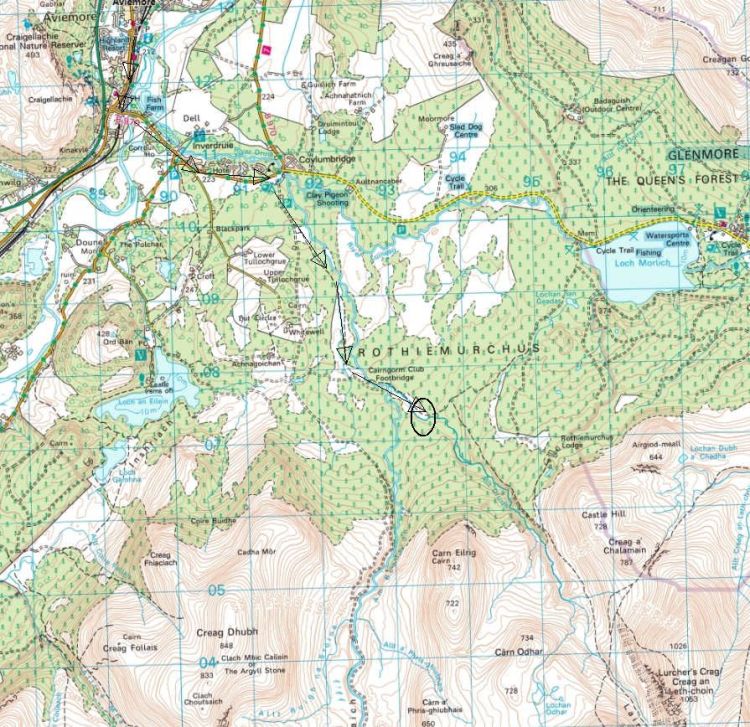
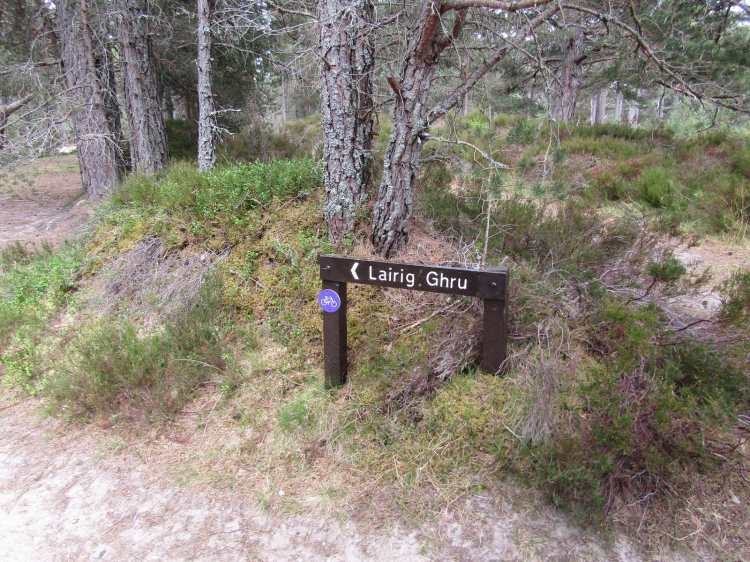
Neither of us wanted that, we discussed at breakfast that we probably needed two days of reduced mileage more than anything else – this would let us get ourselves in better shape before we returned to our intended route. Often the simplest possible solutions make the most sense and we agreed the Lairig Ghru was probably our best bet – it was only a small change of plan from our Ben Macdui route too, so depending how we felt tomorrow the Ben could still be on. The Lairig Ghru is a stony route we knew would aggravate the feet, yes, but it is a well-marked direct path which would make for fast travel.
To give us an extra advantage, we decided to set off this afternoon rather than in the morning – with an aim to clear most of the Rothiemurchus Forest to reduce our day tomorrow. We knew the key was dropping the number of hours we were walking each day significantly and giving the feet time to recover in camp, rather than purely altering the difficulty.
Going Postal
The next port of call was Aviemore Post Office to pick up my resupply box, with Gabe having already picked his up from the hotel last night. Arriving at the post office, only a minute down the road, I asked for my parcel – the cashier disappearing in to the back area to rummage, returning shortly asking after to confirm my name. After a further search, I was told there was no parcel here by that name; and my morning, which held so much promise only moments ago – had rapidly taken a turn for the worse.
I couldn’t understand why it wasn’t there. It had been sent early enough to have have been there by Saturday/Monday, at least two days prior to our arrival in Aviemore. I received a text confirming it was sent on the correct day, so the expectation was that I’d walk in, pick it up and get on with it. Everything had been so well organised.
The parcel was my resupply box, which contained all the food required for the rest of the Challenge – in addition to camera charger, medical supplies and crampons for our next section. It wouldn’t be impossible to replace, though this would mean a supermarket sweep I didn’t want to have to make. There was always the option of ‘outdoors’ meals from Aviemore’s numerous sports shops of course, but that would put me back close to a cool £100 for three meals a day.
A little investigation had to follow, with it unfortunately not aided by a postmaster who had got out of bed on the wrong side that morning. Armed with an identification code, I contacted the post office at which it was sent to confirm what was going on. The (sending) post office confirmed it had indeed been posted and that it should have been there two days ago. I was left with one hope – that it would arrive today, or we were going to need to cut our plans down and leave tomorrow (assuming it arrives), or spend the money, leave today and abandon it.
Rucksack Reduction
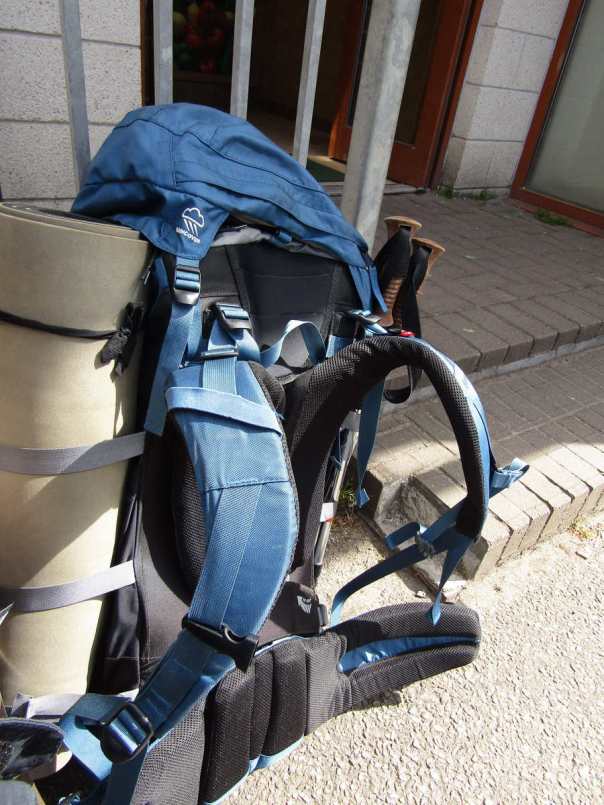
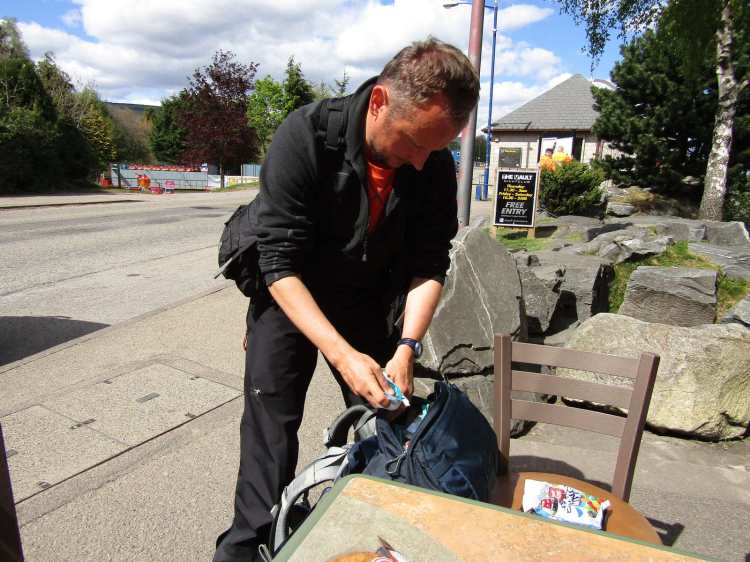
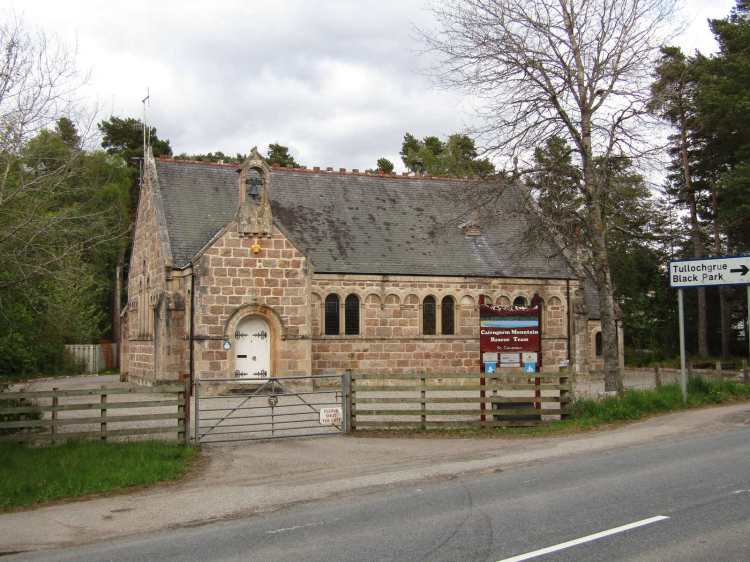
With nothing further I could do until the 11 o-clock delivery, I headed back to the hotel to see Gabe, who had bought a box to send back his excessive kit – of which he had plenty. Because of both of us are Mountain Rescue team members we packed conservatively – mindful of not wanting to be caught out by anything, but especially the weather and the distance. We both have a decent amount of medical training, so our first aid kits were extensive, certainly not as minimal as I had seen other Challengers carry. In addition, we carried a fairly broad selection of clothing and emergency kit (bothy bag, mylar bivvy etc) to handle benightment in the mountains, even if it became seriously cold.
All that said, Gabe was now being ruthless. His pack weight had been a cause of much teasing from me for days – him taking it mostly well – but he knew he had over cooked it. Aviemore was just as much his salvation as mine, and the room rapidly filled with different piles of his kit – the ‘keeps’, and the ‘nopes’. Lets just say there were a lot of ‘nopes’. We packed up and checked out by 10am, hobbling outside to sit in the sun whilst I recharged my camera batteries, soaking up the beautiful morning as Gabe headed to the post office to send his now full parcel home.
Boxing Day
Some time later I saw Gabe wandering back still holding a parcel and assumed he had forgotten something, though as he got closer I noticed it was covered in grey duct-tape, the same colour I had used on mine. Flap over, it seemed our luck had turned – the postal delivery had arrived early and I now had my supplies.
What followed was a careful repacking of the contents of the box, with the crampons, crocs and wind-shirt going back (the wind-shirt was hardly being used and there was no snow whatsoever for crampons). The food bag was refilled and went from wonderfully light to heaving-full, due to the full week of food, with the excess portions returned alongside the rest of the equipment I didn’t want. An hour later, camera fully charged, I put the charger in, sealed the parcel, and wandered to the post office to mail it.
Since we’re talking about food, the dehydrated food we had chosen to pack was going down well, even though I was heartily sick of vegetable curry by this point in the trip – which in truth was bloody strong. We had started a little trading of meals between ourselves like prisoners with cigarettes – “dehydrated mixed bean chilli? That’s worth at least a dehydrated cabbage and sweet potato stew, plus a small packet of jelly beans”.
Starting on the wrong foot
We had the entire afternoon ahead of us and decided to address the feet next. I am conscious that I haven’t described the actual state of the feet so far, with the assumption that some of the gory details could be spared until we were able to do something about it.
The simple fact of the matter was that they Were Not Good. I spent the next hour with Gabe, draining my blisters from the majority of my toes and making sure they were as clean as possible before taping them up. Now sat in the sunshine, we debated how to triage them for the next week of walking.
There are differing schools of thought when it comes to blisters, but by far the most successful is prevention – don’t get them in the first place! This involves sage advice like keep your feet dry, keep the distances down, avoid road walking, etc etc. Being past this point (with most not all), a lot of this advice didn’t apply, nor was not walking anywhere much of a possibility – we still had half of Scotland to cross! Once they are already in-situ, it becomes a whole other ball game. As they get worse and the skin disintegrates past a certain point, you’re pulling the skin off as well as the tape – it becomes a strategy of containment, reducing direct friction and pressure to the area, and above all keeping it clean.
We carried two types of zinc tape with us for such purposes, the stronger was incredible stuff and physically impossible to remove without pulling the skin away underneath – beyond this, if things got really bad we had duct tape – intended for fixing broken hiking poles or the tent, which we would use as a last resort patch for our feet. Applying dressings to both feet after the blisters were drained, we carefully taped and ‘sealed’ with the stronger tape, prioritizing protection over actually being able to access and maintain them.
Departure
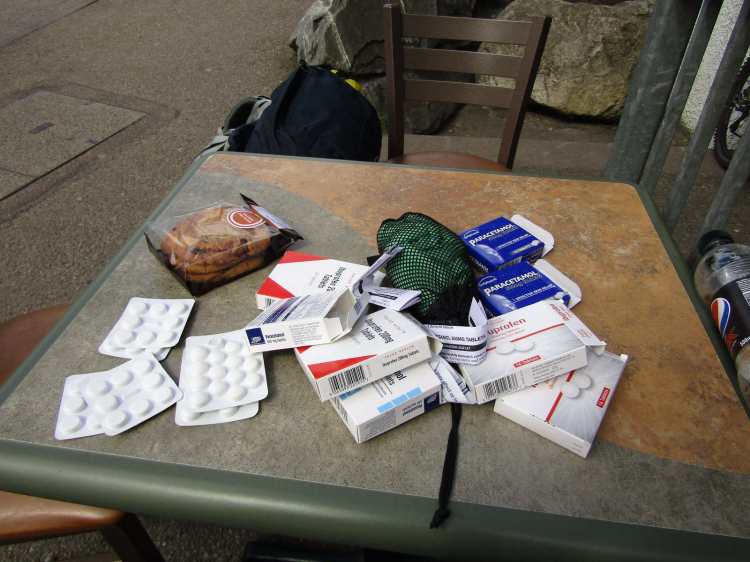
Now patched up, we wandered off to grab some lunch and restock painkillers. We knew we’d need to take an alternating course every couple of hours, and have enough to be able to maintain this until we hit the east coast if necessary. I must add this isn’t an advisable way to travel, however the pain was present enough the previous day for us to be concerned with making sure we had enough, if required, to reach our goal.
Lunch meant us heading for a little cafe with a first-floor balcony with a splendid view over the fells, a place recommended by the hotelier as a solid lunch stop as we left a few hours ago. We ambled in, and to our surprise they wouldn’t let us go out on to the balcony, citing ‘high wind’, with every other table inside full. It was barely more than the most leisurely of breezes, so we said we’d be happy sitting outside with the doors shut, as we just wanted a place to relax for an hour and have food before leaving. This was promptly refused. I remember deeply sighing, I didn’t much feel like an argument and decided we’d take our business elsewhere.
We found a place to eat, with it now mid afternoon, and we began to head out of the town and start heading back in to the wilds again. The next part of our journey was towards Coylumbridge where we would begin to head south to the forest, before heading through the Cairngorms with the eventual goal Braemar. Passing a fish and chip shop, Gabe couldn’t resist ordering a portion, and we ambled at the most leisurely pace of the Challenge so far, sunkissed and enjoying walking in t-shirts again after the previous few days of mixed weather, both glad to be underway. The path wound its way through little wooded areas and over bridges, just far enough from the road to feel we were beginning to return to the great open spaces of the first few days.
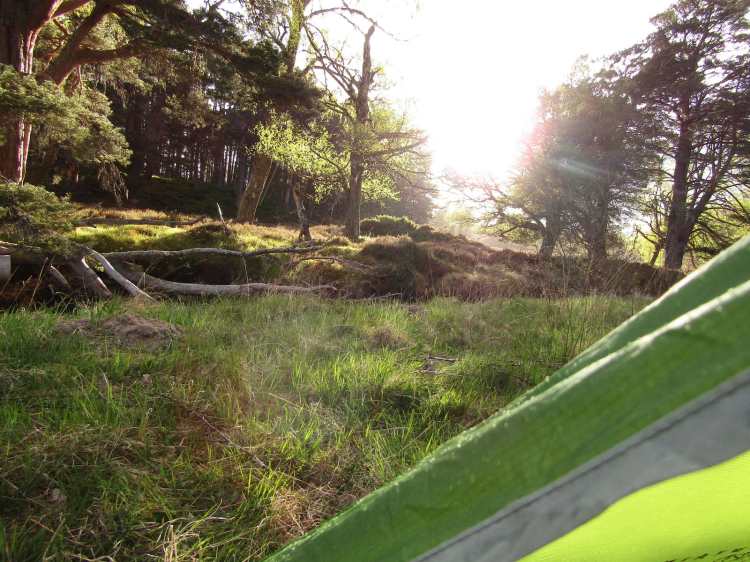
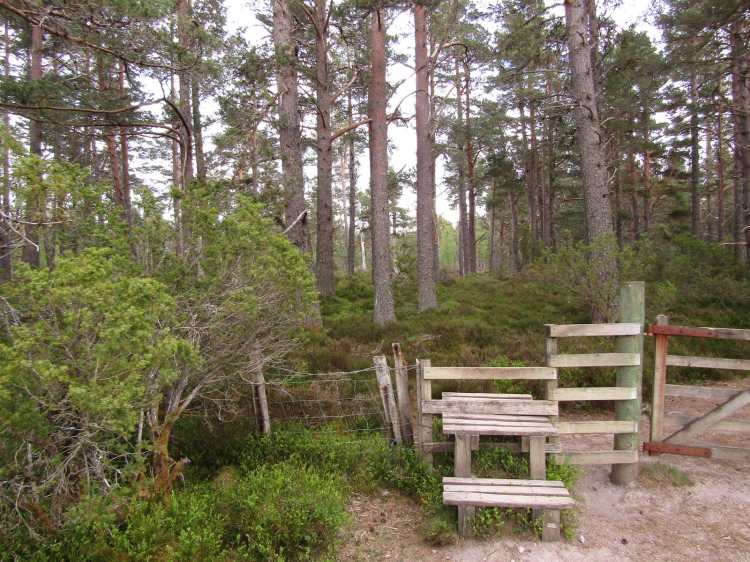
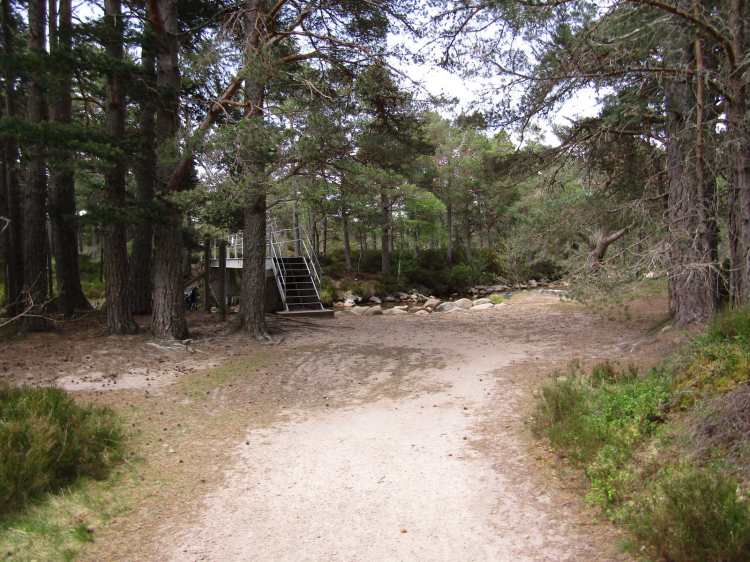
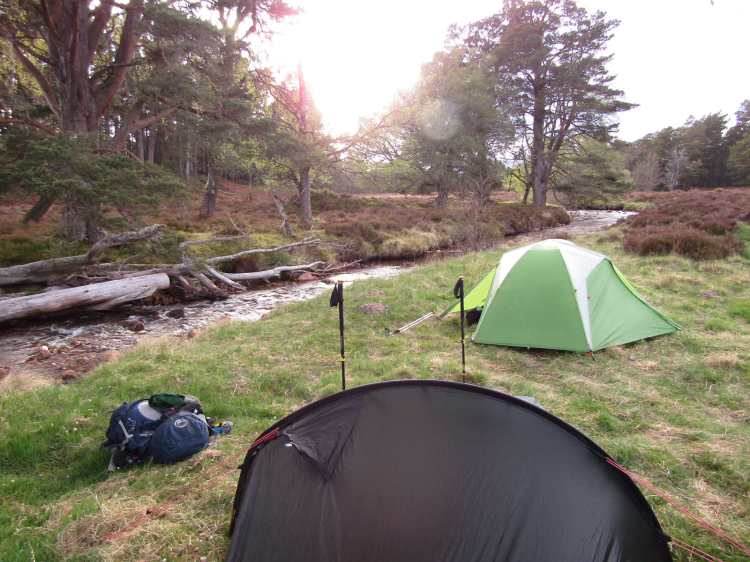
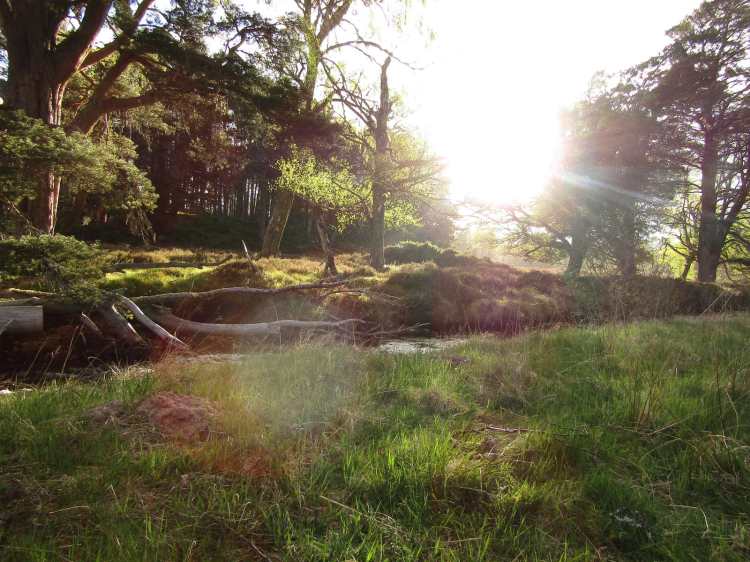
We were enjoying the sunshine so much we nearly walked past the campsite we were turning south at, and quickly found our track to the forest proper. The walk through the Rothiemurchus forest on one of the many snaking biking tracks was a superbly peaceful part of our trip, and was right up there with our best memories of the Challenge. Often when you are in the outdoors with someone you know well you’re able to be silent and enjoy the fresh air in your lungs, and this was one of those moments. We spent a good half hour listening to the streams gurgle, enjoying the smell of the forest and listening to the chorus of birds throughout the trees as they started their evening songs. It really was magical. The route shadowed the Am Beanaidh, the flowing water in the background adding to the ambience as we approached and passed a group of tents, likely Challengers – we didn’t see any faces, everyone seemed to be relaxing in their tents, but we’d no doubt see some of them tomorrow. About 3km later we found a perfect pitch, a nice little spot by a stream with easy access to the water, stunning views, natural wind cover and absolutely flat, all the ingredients for a good camp.
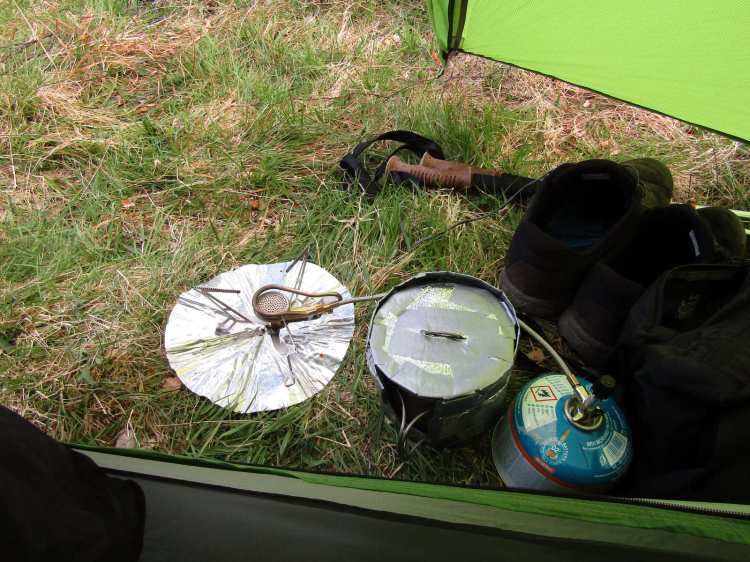
Pitching the tents was quick with us deciding to pitch snug to the lee side of a downed tree, with the last pegs going in just as a few drops of rain started to sput against the flysheet. I got the kindle out (something I hardly had time for so far) and read for a few minutes, totally relaxed as the shower passed overhead. Preparing the food, we watched the sun drop slowly and talked until we were ready to retire to bed – I even remembered to text people to let them know we were in good spirits. Settling in for the night and now looking forward to tomorrow, one of the signature days of our route, it started to rain again. With me now properly snug in my sleeping bag, I read until darkness and slowly drifted off.
 L|ve the Outdoors
They sound even worse than my blisters, and they were bad! I remember making a ‘plan’ for dealing with mine. And altering routes…. Mine were because I brought the wrong liner socks. I usually use toe socks. Someone suggested I had some sent through to Newtonmore Hostel and after that, my feet thankfully started to improve….
LikeLike
They were definitely quite bad, I did take some photos I may inflict upon the curious later, but we both agreed stopping was out of the question.
Once they started developing, though, with the distances/speed we were pushing out we knew it was a question of delaying them more than removing. I’ve heard Injiji toe-socks are the way to go for blisters, so this may be a solution for this type of trek in the future, with sections of hard track.
I’ll have to read through your Challenge account (I think you went through the Cairngorms a couple of days later?), it’s no fun reading the ones where everything goes smoothly!
LikeLiked by 1 person
Even though the toe socks i organised started to improve things, like you, it still kind of turned into a damage limitation How To Finish kind of thing! 😂 i scaled it right back in order to help my feet heal, which they did, but despite everything it was still brilliant and I thoroughly enjoyed it!
LikeLike
I’m glad you managed to enjoy it despite the issues! Feet are one of those things which make or break trips, with a lot of determination required to get on with it – the fact you were going solo for some of it was more impressive! We also loved the experience as a whole despite our ‘intense’ approach, and met some brilliant characters we’d love to see again.
LikeLike
Enjoyable read in a masochistic sort of way! You were certainly doing it the hard way with long days, heavy packs and blisters to match! In my three and a half Challenges, I’ve only had two minor blisters. Over the years I’ve migrated to lightweight mid boots. This year I used Salomon X Ultra GTX mids which were the best I’ve ever used. I did get a tiny blister which was from a loose thread in my sock. I’ve found the flexibility of lightweight boots lessens the likelihood of blisters.
Obviously pack weight is another issue. My base weight is generally 9-10kg. With food and water, it’s never above 15kg. Although I do take lightweight stuff, I have plenty of spare clothes and some luxuries like an umbrella and waders. Everyone has their own comfort/weight trade off but it’s not too difficult to get your base weight down to around 10kg. It’s worth experimenting to see what you are comfortable with. That said, it’s definitely worth doing the Challenge with gear that’s tried and trusted and with enough that you feel comfortable with.
There’s some lovely pictures on your blog. Thanks for sharing. Hope to meet you on a future Challenge!
LikeLike
Hi Robin! I’m glad you think so, even if the masochism could have been toned down a little!
I’ll probably put a gear list up at some point, my final count was circa 12.5kg + food, which wasn’t especially unwieldy considering this contained camera gear and a front pack. After we shared out Gabe’s gear it was up of course, but I don’t feel there were too many savings to be made. I’m in the process of changing to a Trailstar which will drop a near kilo, and I could have easily saved 1kg on a backpack had I picked my 55L instead of my expedition bag, which would have dropped me to 10-11kg for a full set of kit I’d be happy using in snow to the negative double digits.
The real culprit seems to be more the length and intensity of the days, especially the attempted 60km on day 3. I’ll write a few musings at the end which will go in to this in more detail, but we both felt the best solution would have been to accept our Aviemore reservation as lost, instead slowing down, let Gabe recover and just accept it will take an extra day to get there. Were I planning future Challenges with another challenging route (and to be honest I’d find it hard not to, I loved it), I’d absolutely push for this flexibility, with only accommodation at the start and a return trail set in stone.
As for the shoes, I was using Inov8 Roclite 282 GTX, which were generally quite good and had a solid tread for rough ground, even if the sole felt like walking on paper after the hard packed ‘road’ sections. I definitely see Mids as a possible solution for more resilience, but passed Challengers happy wearing a whole selection of boots, all the way to leather B1s without too much trouble.
Appreciate the love for the pictures, we took hundreds of shots and filmed a lot of content (we actually took a daily video diary, which is absolutely hilarious in parts as we got more tired), which will probably see the light of day when I finally get around to re-encoding it..
LikeLike
I see. I was under the impression you were carrying a much heavier load than that! 12.5kg is by no means excessive.
Footwear is a very much a personal preference thing and the only way to work out what suits you is to try it out. I do think it’s worth having a bit of cushioning underfoot, especially on roads and tracks. My longest day was only 30km, but a lot of it was on tracks and my feet felt pretty good. I’m not sure I could do 60km in a day, so I’ve no idea how it would feel! This year I used moulded footbeds (Sidas Conformable) which were superb and definitely helped to avoid fatigue.
Looking forward to reading about the rest of your trip. Hopefully it was enjoyable enough for you to do another Challenge.
LikeLike
Bit delayed with this, but I double checked for you. 12.5, plus half a kg of camera equipment, 3kg of food, 1kg of water and around 1.5kg of Gabe’s kit. So 17-18kg total, I wouldn’t call it light by any means, but certainly with us doing so much wild camping we wanted to have enough backup kit.
LikeLike