
I tried to maintain an ethos of not over-packing when I put together my final gear list for the TGO Challenge, which at 12 days (with a 7 day food carry) was my longest backpacking trip at the time I did it and not to mention the mercurial nature of Scottish May weather. All of this broad allowance for changeable conditions added weight, unfortunately. When originally putting this together there was a determination to make the most of the gear I already owned rather than pick up new purchases ‘just because’ and I largely kept to this. In retrospect I had more than enough gear for Scotland’s weather, especially in May, and doing it again I’d try to pair some of this back.
One particular moment the night before leaving I noticed my 7-day food bag wouldn’t fit into my 55L pack (unless I crushed it in, which wasn’t a sensible idea with food bags liable to burst), I ended up taking my 75L ruck which is primarily for expedition trips and is a bomber piece of kit, yet this meant an extra 1.5kg carried in backpack weight alone.
I’m not putting together an exhaustive kit list (at this stage!), but I have included a set of items I found very useful, largely surplus to requirements and a short summary for what I’ve refined since returning. It’s worth emphasising this is what works for me, it comes from being tried and tested and I’m comfortable using every item in it.
First, the list of kit which was solid, did the job on the two weeks of the TGOC and I’d bring again:
HITS
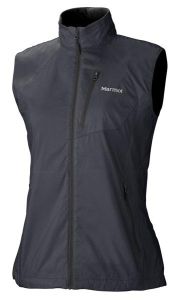
Marmot Stride Vest
A soft-shell similar in technology to the Vapour-Rise from Rab, which is basically a modern version of the classic Buffalo pertex/pile system from the 1970s except less insulating. No fancy shell fabrics here, it is designed to move moisture to the surface and keep you warm whilst doing so. DriClime technology is fairly old now but it works by using an insulated, hydrophillic (water attracting) lining which supplies a surprising amount of warmth and a windproof outer with a water repellent layer. This ‘hydrophillic’ action moves the moisture from against your skin to the outer side of the garment, where the wind hopefully blows it away. The best bit about a vest is it lets you work on tanning your arms whilst you gently walk through the outdoors – that it was only about 150g helps, too. I brought this instead of bringing a fleece and spent most of the time wearing it on top of a merino baselayer as it cut wind, gave me warmth and dealt with light rain. When working hard uphill it lets you vent from arm holes quickly, which obviously combines well with pit zips in bad weather if you have a shell on top.
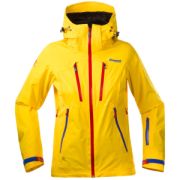
Bergans Trolltind jacket
Shell jacket with countless pockets made of Derminax NX, a hydrophillic alternative to Goretex Pro with breathability around the same level of Pertex Shield+ – which is equitable to most windbreakers. This has a bomber hood and the 2.5layer construction gives a little warmth compared to most shells, and most importantly blocks most of the weather. Combing the Stride and the Trolltind kept me warm and dry without catching a chill due to both pieces constantly moving water away from the body. It is a somewhat ‘heavy’ at 800g which puts it in the Paramo range, and indeed has pretty similar technology; which due to how hydrophillics need a ‘liner layer’ to act as a ‘sponge’ to better transfer moisture this can’t be helped unless I switch to an altogether lighter technology. We’re likely talking a 400g saving here so this will likely be one of the last pieces to replace.
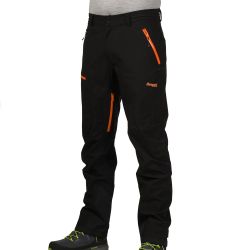
Bergans Breiheimen 3-layer
Shell trousers which were superb, and at just over 500g extremely light for triple layer technical gear. Again like the rest of my kit these are hydrophillic rather than relying on membrane technology, which makes it work comparatively more efficiently in cold temperatures. The weather simply didn’t touch these, even despite constant wind driven rain on some days I had warm, dry legs even when my hiking partner was soaked through. The main downside is cost, as these are around £240 a pair, so wear gaiters with them and wield your crampons carefully! If I would make one change, it would be to throw in a light pair of shorts to wear on sunny days; or something like a pair of Rohan bags.
MISSES
Inov-8 Roclite GTX (315?)
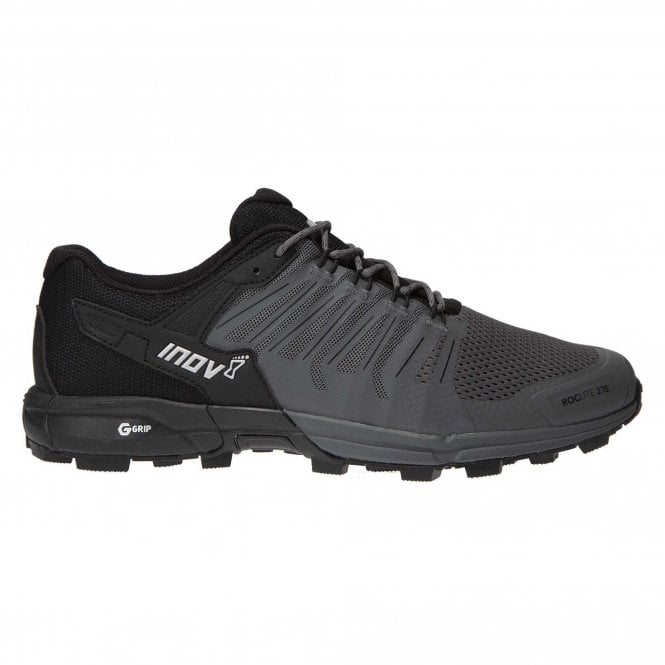
Now overall I’m a fan of Inov8 footwear, it’s great for running, decent grip and keeps you solidly training without the need for heavy clog boots. But as it was, the goretex lined trail runners are not something I’d buy again because of the specific problems goretex liners suffer from – in short, once they get wet from the inside they just don’t dry out.
When you’re spending eight hours or more a day on your feet this ends up with your feet being permanently in a sort of warm, soggy microclimate and the only way to avoid your feet disintegrating is to change socks – something we got in to a military-style level of routine with by the second half of our TGO. Were I hiking the route again I’d either use non-goretex lined trail runners to focus on naturally drying your feet with them forcing the moisture out from the shoe through your own movement as you walk, or a proper leather boot which would suffer from less water ingress from the start.
Note I’m a fan of Inov8 products but be aware if you have any foot problems to consider inserts, many of their shoes are stripped down to hit a low weight point but this doesn’t give much cushioning, doesn’t matter much for trail runs but longer backpacking trips with heavier loads might make you consider your choice.
 L|ve the Outdoors