
Many outdoor pursuits tend to need related equipment – pack-rafting kinda needs a raft, climbing needs a rope (unless you’re Alex Honnold); and ice climbing needs ice tools. They’re tools to enable that specific hobby.
Backpacking can be different: and some are incredibly committed to food-powered-travel with the absolute minimum and relish in trying to push their carried weight down and further down still. Often carrying barely a tarp and sleeping bag, eating minimalist high-calorie dried food and consider this ethos a badge of honour. At the other end of the scale you have ‘glampers’ with oveflowing home comforts such as spacious tents, fresh cooking ingredients and fold up seats. There is nothing wrong with any of these approaches of course, it’s entirely down to personal preference, but it’s interesting to consider just how people move from one extreme towards the other (or just happily exist somewhere in between).
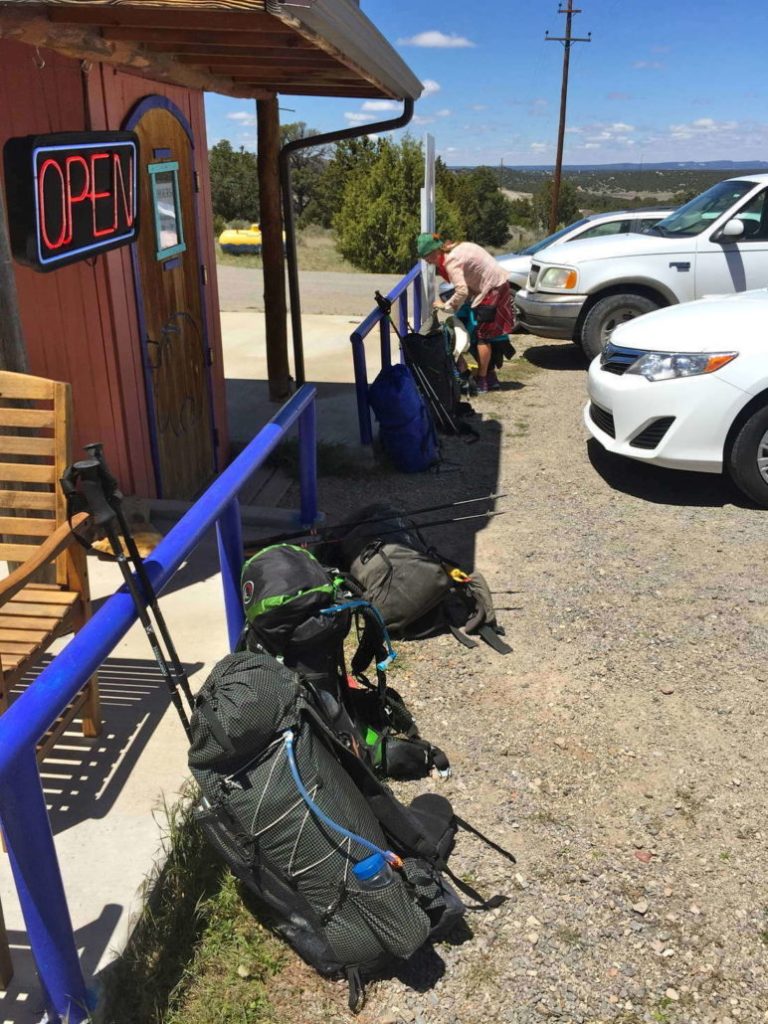
I’ve found through experience that I prefer high-mileage days which obviously makes the amount carried have a significant effect on the level of fatigue by the end of a day. On the other hand, I’ve not yet ‘gone fully ultralight’ (which is usually considered below 10lbs/4.3kg) though most of my kit is reasonably light – though not at the cost of skimping on durability.

I tried to maintain this ethos when packing for the TGO Challenge which at 12 days was my longest backpacking trip to date and needed gear for a range of conditions due to how unpredictable Scotland can be. Firstly there was a determination to make the most of the gear I already owned rather than pick up new purchases ‘just because’ and I largely kept to this. In retrospect I had more than enough gear for Scotland’s weather, especially in May, and doing it again I’d try to pair some of this back.
One particular moment the night before leaving I noticed my 7-day food bag wouldn’t fit into my 55L pack (unless I crushed it in, which wasn’t a sensible idea with food bags), I ended up taking my 75L ruck which is primarily for hauling climbing gear and is a bomber piece of kit, yet this meant an extra 1.5kg carried in the backpack weight alone.
I’m not putting together an exhaustive kit list (at this stage!), but I have included a set of items I found very useful, largely surplus to requirements and a short summary for what I’ve refined since returning. It’s worth emphasising this is what works for me, it comes from being tried and tested and I’m comfortable using every item in it.
First, the list of kit which was solid, did the job on the two weeks of the TGOC and I’d bring again:
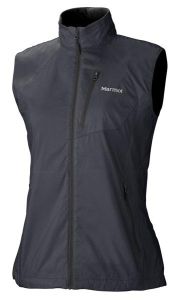
Marmot Stride Vest
A soft-shell similar in technology to the Vapour-Rise from Rab, which is basically a modern version of the classic Buffalo pertex/pile system from the 1970s. No fancy shell fabrics here, it is designed to move moisture to the surface and keep you warm whilst doing so. Has an insulated hydrophillic (water attracting) lining which supplies a surprising amount of warmth and a windproof outer with a water repellent layer. Only about 150g, too. I brought this instead of bringing a fleece and spent most of the time wearing it on top of a merino baselayer as it cut wind, gave me warmth and dealt with light rain. When working hard uphill it lets you vent from arm holes quickly, which obviously combined with pit zips in bad weather if you have a shell on top.
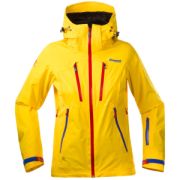
Bergans Trolltind jacket
Shell jacket with countless pockets made of Derminax NX, a hydrophillic alternative to Goretex Pro with breathability around the same level of Pertex Shield+ – which is equitable to most windbreakers. This has a bomber hood and the 2.5layer construction gives a little warmth compared to most shells, and most importantly blocks most of the weather. Combing the Stride and the Trolltind kept me warm and dry without catching a chill due to both pieces constantly moving water away from the body. It is a somewhat ‘heavy’ at 800g which puts it in the Paramo range, and indeed has pretty similar technology; which due to how hydrophillics need a ‘liner layer’ to act as a ‘sponge’ to better transfer moisture this can’t be helped unless I switch to an altogether lighter technology. We’re likely talking a 400g saving here so this will likely be one of the last pieces to replace.
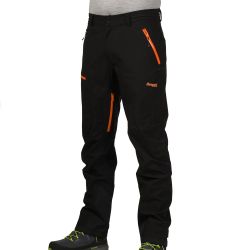
Bergans Breiheimen 3-layer
Shell trousers which were superb, and at just over 500g extremely light for triple layer technical gear. Again like the rest of my kit these are hydrophillic rather than relying on membrane technology, which makes it work comparatively more efficiently in cold temperatures. The weather simply didn’t touch these, even despite constant wind driven rain on some days I had warm, dry legs even when my hiking partner was soaked through. The main downside is cost, as these are around £240 a pair, so wear gaiters with them and wield your crampons carefully! If I would make one change, it would be to throw in a light pair of shorts to wear on sunny days; or something like a pair of Rohan bags.
 L|ve the Outdoors